Create the list from the work
Add a part when a project task needs it, rather than keeping a separate wish list that no one can explain. A clear name and a short note are enough to start a useful record.
- Use the name the crew will recognise when looking for it.
- Add the quantity and an approximate price when useful for planning.
- Record compatibility questions instead of treating them as settled.
Connect each part to a task
Link a part to the task that depends on it. This gives the crew a reason for the item and makes it easier to decide which purchases matter for the next session.
- Name the task that will use the item.
- Keep a part uninstalled until the related work is actually complete.
- Split items into separate records when they have different decisions or statuses.
Use statuses that match the real handoff
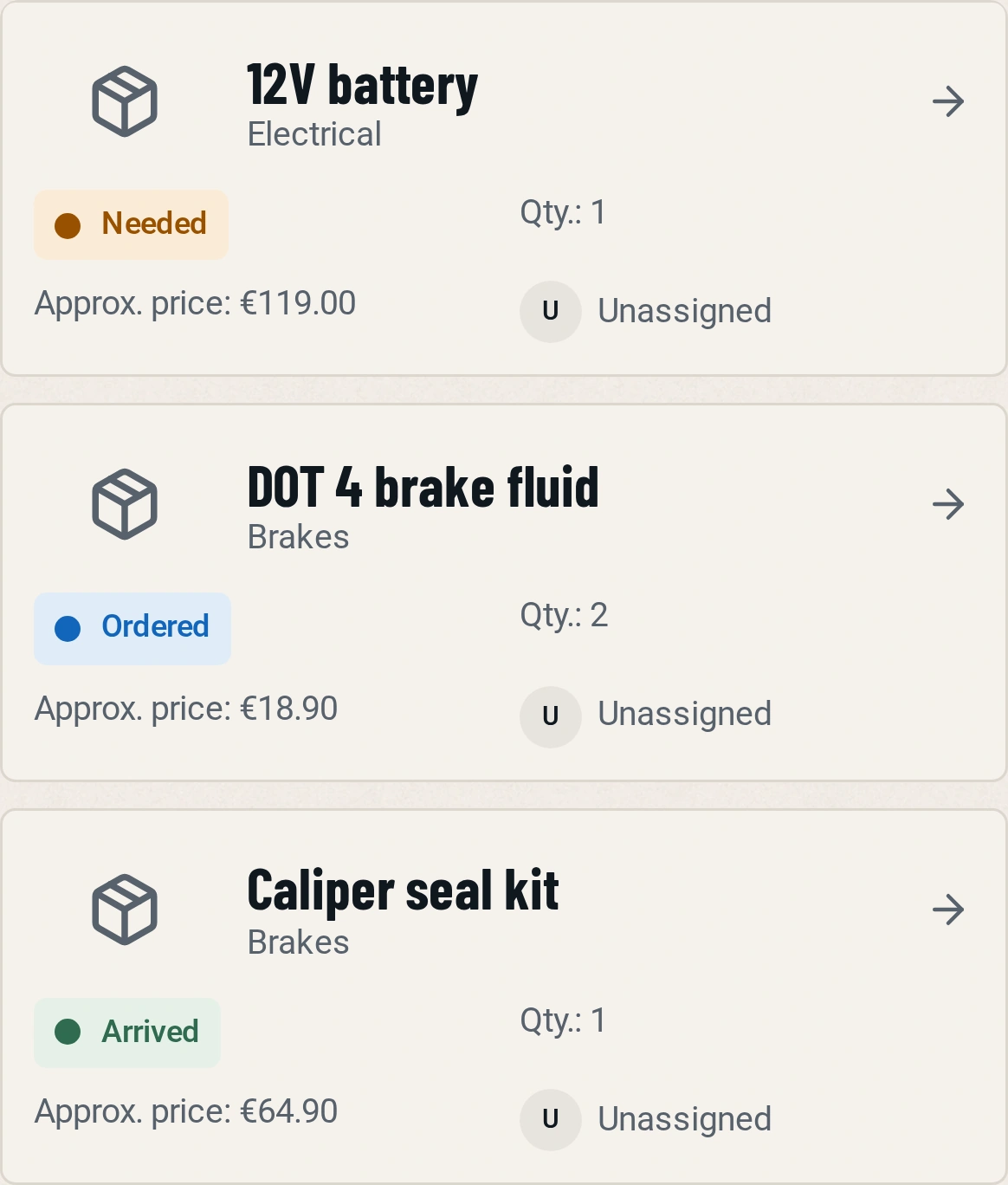
Move a part through needed, ordered, arrived and installed. These simple states tell the crew what can be bought, what is on its way and what still needs work without requiring a separate conversation.
- Keep it as needed while the choice or purchase is still open.
- Mark it ordered after the crew has committed to the purchase.
- Mark it arrived when it is available to the project, then installed after the related work is done.
Keep purchase decisions explicit
Use notes, approximate prices and task context to make a purchase understandable to the group. The parts list supports coordination; it does not need to become a full accounting system.
- Write down the chosen option and any open alternative in the part notes or its linked task.
- Use the approximate price to compare options before ordering.
- Record the group’s decision in the part notes or on its linked task.
Check the list before the next session
Before meeting, look at parts that are still needed or ordered and compare them with the next tasks. That small check helps the crew choose work that can move forward and spot what needs a decision.
Illustrative example: a small parts plan
For example, a crew might add two matching items as quantity 2, link them to the same task, leave the record as needed while comparing options, then mark it ordered once the choice is agreed. The example shows the handoff and is not a real purchase.