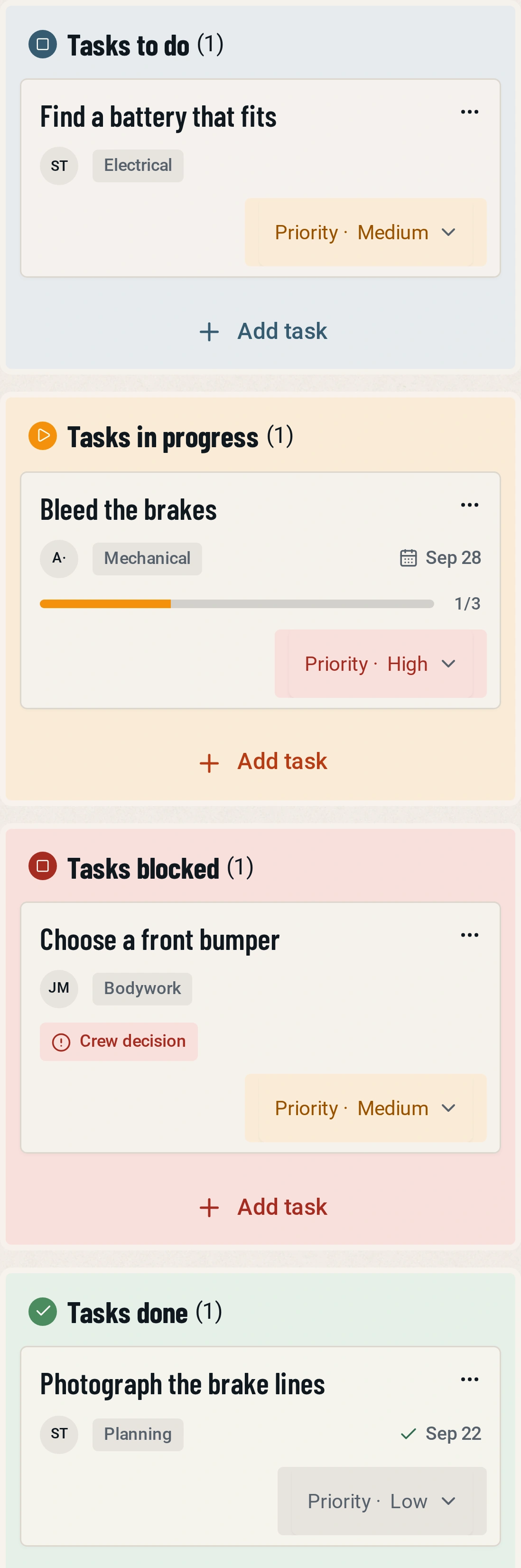
Start with a visible next action
Turn a broad intention into an action someone can recognise as finished. “Sort the front end” is a useful topic, but a task such as “make a list of the front-end items to inspect” gives the crew a clear first move.
- Use a verb and name the part of the project involved.
- Keep one outcome per task when the work can be reviewed separately.
- Add a checklist for small steps that belong to the same outcome.
Give the task enough context
Use the task description and checklist to record the decision someone would otherwise have to ask about in the garage. Keep observations, links to relevant parts and the agreed definition of done together.
- Describe what finished looks like.
- Record measurements, choices or questions that affect the work.
- Link the parts needed for the task when they are known.
Make responsibility easy to read
Assign a task when one person is taking the next step, while keeping the project open to every garage member. Ownership helps the group coordinate; it does not prevent a friend from helping.
- Choose one person to move the task forward.
- Use comments to ask for input without losing the task context.
- Add a due date only when it helps the crew make a decision.
Show blocked work instead of hiding it
Mark a task blocked when the next step depends on a decision, a part or another task. A visible blocker tells the crew what to resolve and prevents a stalled job from looking forgotten.
- Write the specific condition that is blocking progress.
- Create a follow-up task when the unblock needs its own action.
- Return the task to active work when the dependency is resolved.
Close the loop after the session
Move completed work into its finished state and leave a short note when the result needs context. The history keeps the project understandable without making the crew reconstruct what happened from memory.
Illustrative example: prepare a handoff
For example, a crew can create a task called “prepare the next garage session”, add a checklist for confirming open decisions and assign it to one member. A second task can stay blocked until that decision is recorded. This shows coordination without describing repair work.